
NOW IN ITS 20th year, the Cinemalaya Philippine Independent Film Festival (CPIFF), which ran from August 2 to 11, upheld the theme of “Loob, Lalim, Lakas” and featured 10 full-length and 10 short films. Highlighting the organization’s “Sineng Malaya” essence, the festival aired a variety of films that satisfied our movie-loving appetites at Ayala Malls Manila Bay.
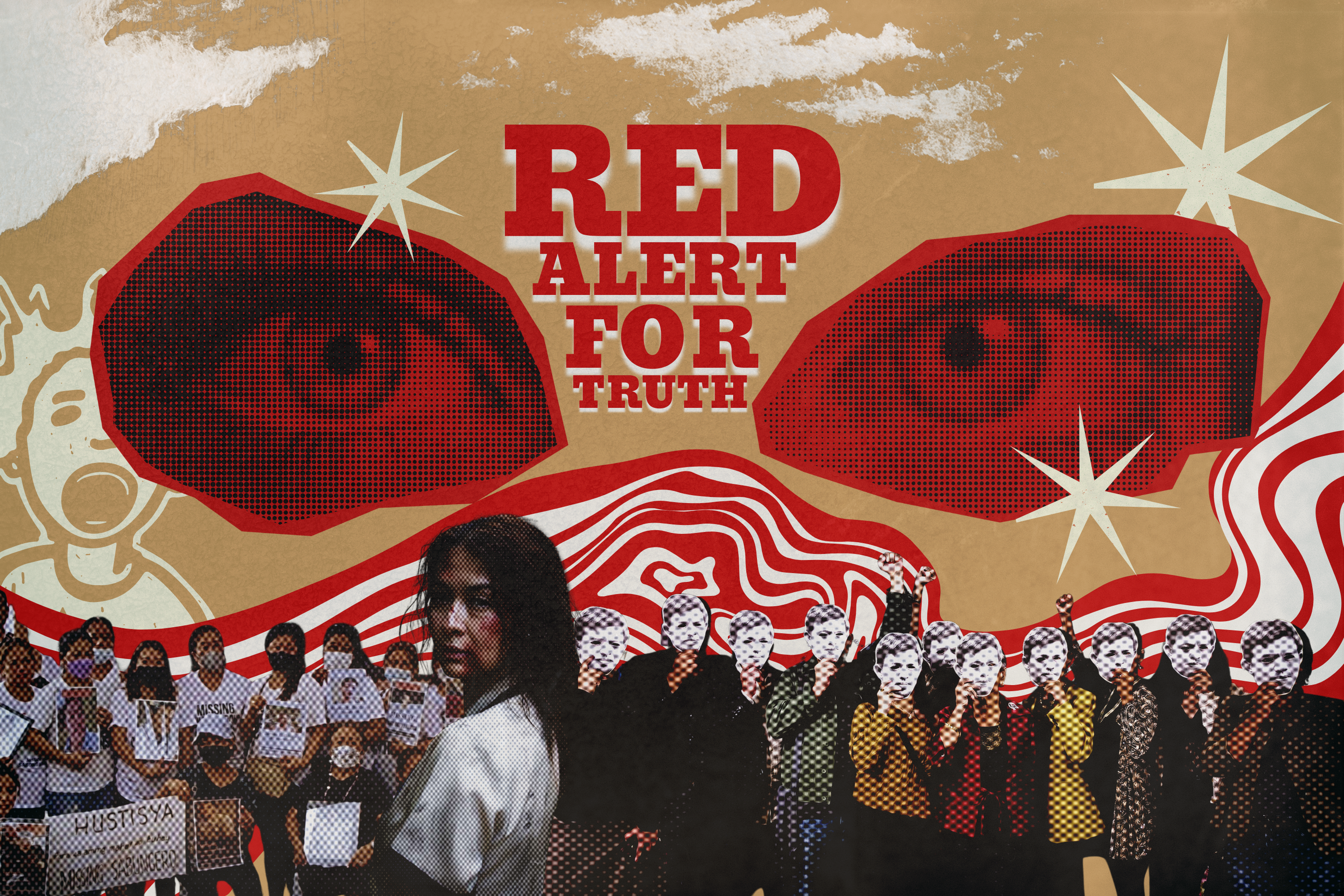
However, in the wake of the CPIFF, the lineup of films that touched on topics that alerted the Movie and Television Review and Classification Board (MTRCB) inevitably raised some eyebrows. On that note, here is your palate of four of the most controversial Cinemalaya films, along with a glimpse of who they turned heads.
Alipato at Muog
Starting off hot, “Alipato at Muog” takes place in the year 2007, wherein activist Jonas Burgos mysteriously disappeared. This documentary navigates the experience through the eyes of JL Burgos, the director of the film and Jonas’ brother, and his mother as they search for their missing family.
JL Burgos, involved with filmmaking for 25 years, was already immersed in creating films centralizing on human rights. This submission for the 2024 Cinemalaya was no different. The struggle for justice seen through unequivocal accounts and testimonials from people in real life–witnesses and specialists–have portrayed a reality so frayed, it warranted an “X” rating from the MTRCB because the film “undermines faith and confidence in the government and/or constituted authorities,” said the Board. It was also the reason it was banned from public viewing, reports from Inquirer, ABS-CBN and the Human Rights Watch write.
After much urging from the Concerned Artists of the Philippines, the director, and supporters, the Board finally rescinded the ban and instead, re-classified the film from being X-rated to R-16.
Lost Sabungeros
A GMA Public Affairs film, “Lost Sabungeros” is its “first-ever investigative documentary film,” according to a GMA article published last July 31. Like “Alipato at Muog,” the film revolves around the abrupt and mysterious disappearances of over 30 sabungeros or cockfighters during the height of the COVID-19 pandemic.
In that period, cockfighting arenas were shut down, leading to Philippine gambling culture infiltrating the online scene, which became an easy-money operation for these sabungeros. Afterwards, within several months, more than 30 of these sabungeros were abducted “indiscriminately.”
Moreover, the film captures the waves of loss coming from families of the missing, portraying their harrowing fear overcome by their desire for justice, which was carefully put together by the film’s director, Bryan Brazil.
With two years of production for the film, everything went down the drain after Cinemalaya canceled its screenings because of what the Festival said was “security concerns.” As a result, “Lost Sabungeros” never made it to the final line-up of films for this year’s Cinemalaya. While the production team had expressed their grievances about the withdrawal, there is still a ray of hope for they have received “several invitations to screen the film at various venues and [are] exploring other opportunities as well,” GMA writes.
Balota
Taking place in a small town, Director Kip Oebanda’s Cinemalaya submission portrays the realities of fickle democracy easily manipulated by violence. The film, set during the 2007 mayoral elections, follows Emmy, a well-known teacher of the town, who was appointed as a member of the Board of Election Inspectors for her local precinct played by Marian Rivera.
After violence surges through the town, she flees into the thicket with the last ballot box of the elections’ results. In protecting it, she risks the lives of her community and her loved ones.
Oebanda explains that this film was a “response to the electoral lies, revisionism, violence and cheating we experienced firsthand – to satirize it without necessarily polarizing those who already belong to political echo chambers.”
He further recounted his painful experience during the 2022 elections, after having to be a “part of a government system so flawed.” “Corruption of our electoral system is a timeless tale, but it doesn’t have to be. So, we made a film about people who are sick and tired of having the rich and powerful take their power and voice away from them.”
The Hearing
A mother, a child, and a crime–all these ties together in Lawrence “Law” Fajardo’s film, “The Hearing” which narrated Lucas who was sexually abused by the influential Fr. Mejor and was later taken to court after Lucas’ parents came to know the truth. While they faced the obvious obstacle of language, the family was fortunate enough to run into a sign language interpreter, Maya, who coincidentally was no stranger to the corruption embedded in cases similar to Lucas’.
Like the other Cinemalaya films, Fajardo’s film sought to “give a voice to the voiceless.” “About 70 percent of deaf children are sexually abused in the Philippines regardless of their gender,” Fajardo emphasized.
Many are unreported and often dismissed because of the “barriers” such as the lack of sign language interpreters in the Philippines, “especially in the regions,” Fajardo said.
He added that a good number of deaf people in the country from the provinces are not trained in Filipino Sign Language, explaining that the “legal language is difficult enough to understand for the average hearing person, so how does one who cannot hear and express themselves understand and be understood as they fight for their rights as human beings?”
Accordingly, Fajardo hopes for the film to “properly address the need to change and improve our education system, laws and the justice system to protect and serve everyone, especially the most vulnerable.”
For Prof. Marvin R. Reyes, PhD, Prefect of Student Activities (OPSA), “social relevance and lessons” are the secondary principles taken from watching a film. What comes first, he said, is “entertainment.”
However, “…One good thing with Cinemalaya is… they accept scripts or movies of any angle of any…genre,” adding that the festival is all about “magnifying the realities” of “what is happening in our society, but that does not necessarily mean that that is the truth.”
Finally, he explained how the truth is “somehow subjective” because what could be true to someone would be a different truth from someone else.
(with Dianne Radel Magallon)