
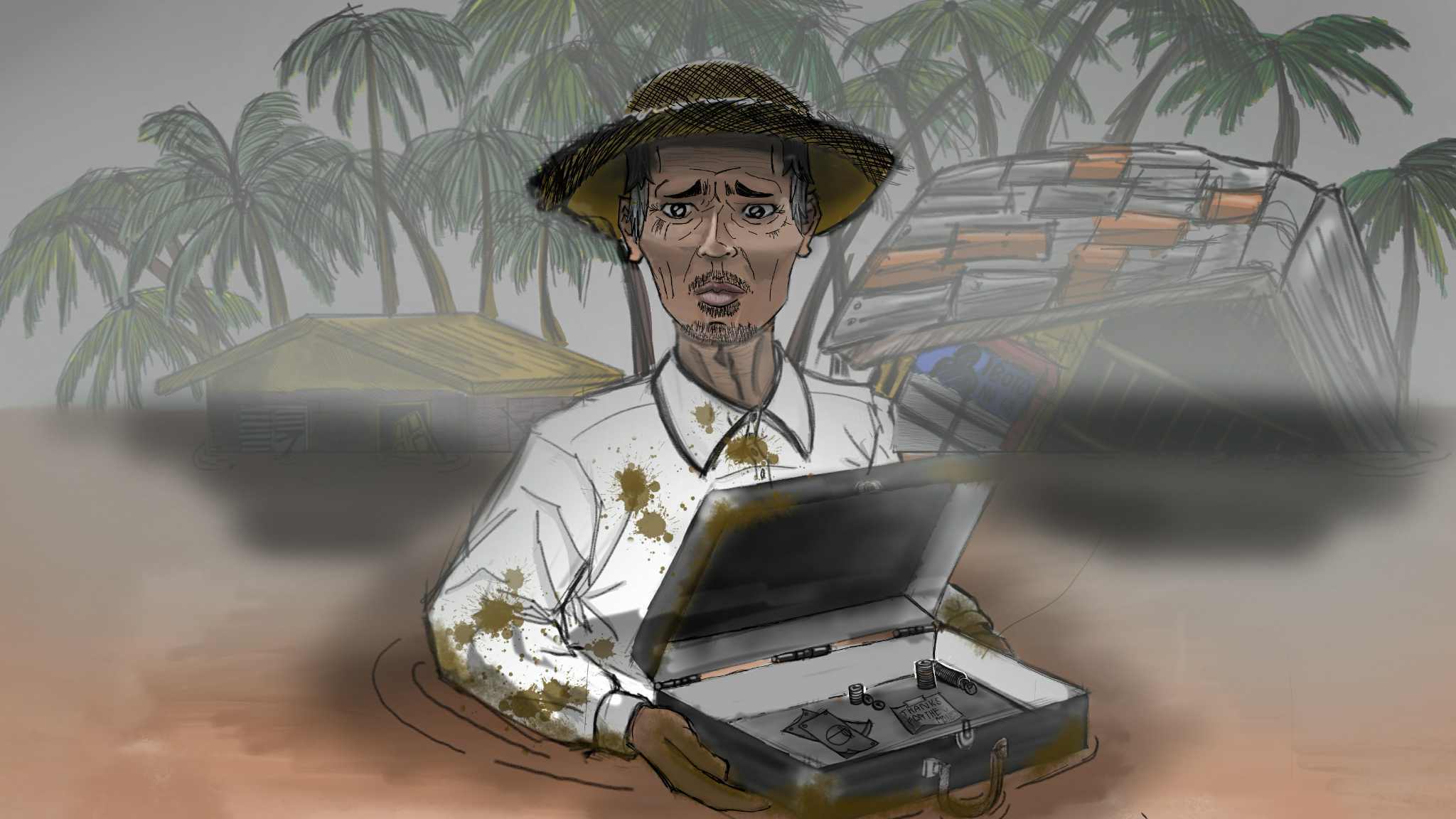
GIVEN THAT THE Philippines is a tropical country prone to extreme heat and humidity, heavy rains are to be expected. However, flooding should not remain a recurring sight when billions of pesos have been allocated to mitigate such disasters. Each looming storm, therefore, serves as a grim reminder of how turbulent the nation’s political climate remains; often more so than the natural one.
Over the span of 15 years from 2011, the Philippine government has allocated a total of Php 1.47 trillion for flood control and mitigation programs. Moreover, the Department of Public Works and Highways (DPWH) received the second highest budget allocation in the 2025 General Appropriations Act (GAA) with a total of Php1.007 trillion.
However, in the aftermath of typhoons Crising, Dante, and Emong, which left 26 dead and much of the country ravaged, the whole nation is left questioning where these funds had been used appropriately.
When the floodgates opened
In 2024, 5,500 flood control projects were supposedly completed across the country, as claimed by President Ferdinand “Bongbong” Marcos Jr., during his third State of the Nation Address (SONA). In the year after, Marcos attested to the failure of these projects in keeping the citizens safe during his fourth address.
“Kitang-kita ko na maraming proyekto para sa flood control ay palpak at gumuho. At ‘yung iba, guni-guni lang,” he said in the address, confessing that the individuals involved in these projects were merely profiting off the funds meant for sturdy, let alone existing, infrastructure.
This kicked off investigations into the anomalous status and corrupt practices behind the projects, with President Marcos Jr. ordering the DPWH to submit a list of projects that were started or completed in the last three years, whether started or completed, and take note of the unsuccessful projects. Moreover, the president vowed to publish the list.
Immediately, the conditions of innumerable projects were revealed to be subpar or even absent, including a Php55 million riverwall in Bulacan never having been constructed, a Naujan-based project being funded three separate times but never actually being built, and the Quezon City Government revealing that 66 projects had supposedly been accomplished but could not be located.
Senate begins own probe
The Senate’s Blue Ribbon Committee launched the primary investigation into the flood control project anomalies after 15 contractors were identified as having received a combined allocation of ₱100 billion since 2022. The committee summoned the contractors for hearings, but eight failed to attend.
During the proceedings, spouses Curlee and Sarah Discaya of St. Gerrard Construction admitted to owning nine additional construction firms, two of which ranked among the top 15 contractors for flood control projects nationwide.
According to the Philippine Contractors Accreditation Board (PCAB), the Discayas had orchestrated a “scheme of joint or multiple bidding participation designed to influence the outcome of public bidding, manipulate results, and corner public projects, thereby undermining transparency, fairness, and competition in violation of procurement laws and licensing requirements.” Consequently, PCAB revoked the licenses of all nine firms, pending further hearings.
On September 8, the Discayas implicated several lawmakers allegedly connected to the anomalous projects, coinciding with earlier reports that at least 67 members of the House of Representatives might be acting as contractors for government-funded infrastructure.
Brice Hernandez, a former DPWH assistant district engineer in Bulacan, accused Senators Jinggoy Estrada and Joel Villanueva of receiving kickbacks, citing a photograph showing stacks of alleged bribe money. Similarly, Henry Alcantara, former Bulacan chief engineer, admitted to delivering kickbacks to Ako Bicol Party-list Representative Zaldy Co and implicated former Senator Bong Revilla, as well as incumbent Senators Villanueva and Estrada, among others, as beneficiaries.
Article VI, Section 14 of the 1987 Constitution prohibits members of Congress from intervening in government contracts or franchises for personal gain, stating that no legislator “shall intervene in any matter before any office of the Government for his pecuniary benefit or where he may be called upon to act on account of his office.”
As of October 4, the Senate announced the suspension of its hearings on the DPWH anomalies, citing the “unavailability of necessary documents and conflicts with other hearings.”
Despite the suspension of the hearings, the investigations on the anomalous projects remain persistent with the formation of the Independent Commission for Infrastructure (ICI) to investigate corruption in flood control projects over the past decade.
Former Justice Secretary Jesus Crispin Remulla, who has been appointed by President Marcos Jr. to be the next Ombudsman, confirmed that the Discayas’ initial affidavit is under review, while the National Bureau of Investigation (NBI) is preparing a case buildup against those implicated, including resigned Representative Zaldy Co, Senators Francis Escudero, Joel Villanueva, Jinggoy Estrada, and several DPWH officials.
Amid the ongoing proceedings, thousands of Filipinos have denounced the slow-moving bureaucracy in holding the responsible officials accountable, venting out their long-suppressed anger at the government.
To this day, the movements remain steadfast. Progressive groups are organizing further demonstrations in the coming months, aiming to match the turnout of landmark protests such as the Trillion Peso March and Baha sa Luneta. Youth activists continue to lead the charge across schools and universities nationwide.
These movements embody the hope that public indignation will not fade with the suspension of hearings or the mere passage of time. For many, this is no longer a contest between political factions but a struggle of the Filipino people to reclaim what is rightfully theirs.