
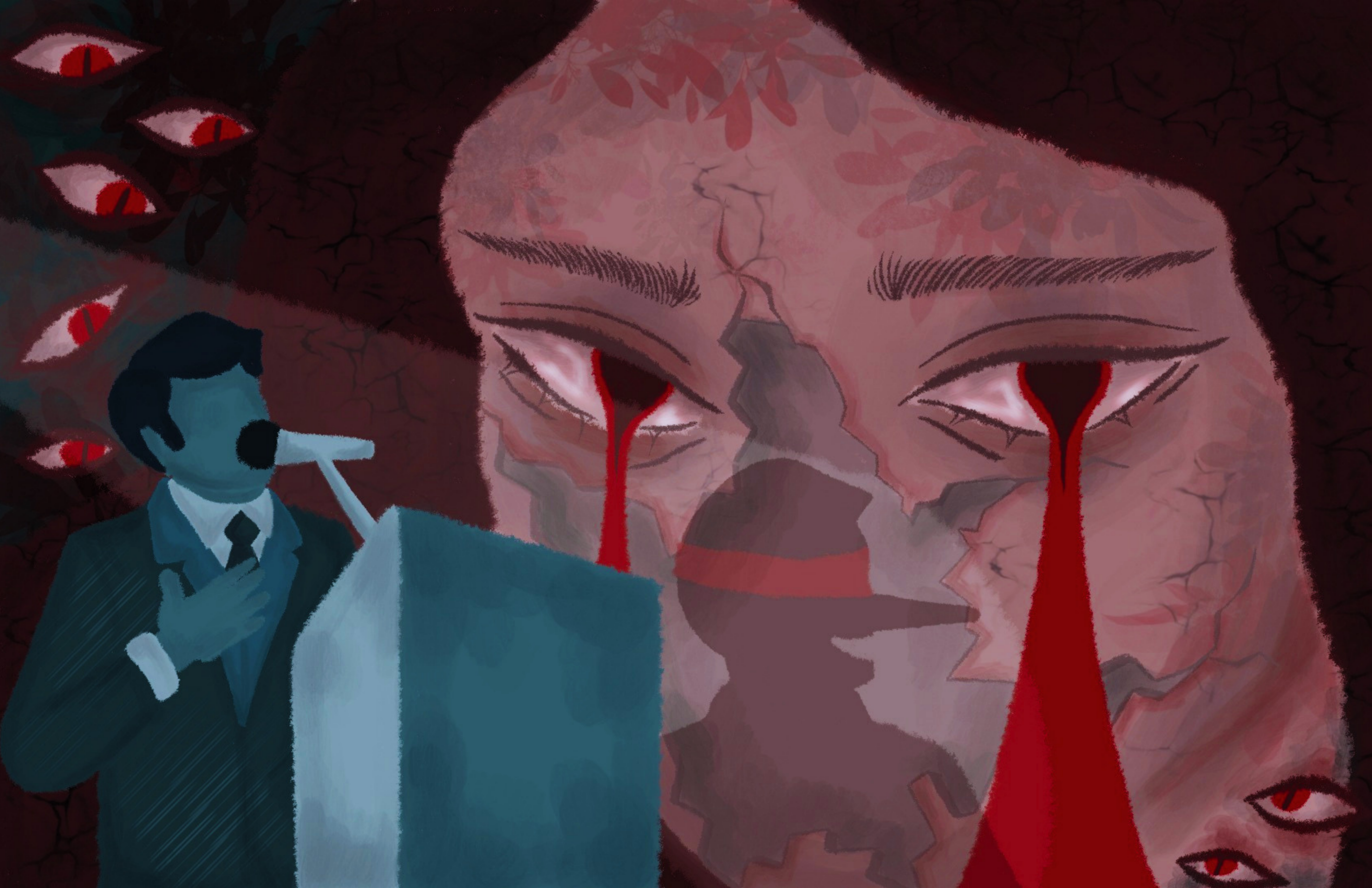
RELENTLESS BATTLE STRIKES in the penumbra of shadows cast by men who stand in an exterior of power, only to create a path formed by the women they dare to drag and reduce to their inaccurately rotten perception and definition of who women are—as the fight carried for time immemorial comes into its new shape in the contemporary landscape.
Shadow in the context of men and their alpha-bravado tendencies is not the kind that shades from the harshness of the rays. It is a kind that brings darkness among the order of peace, justice, equality, and respect rightfully revered to one another.
In these uttered words, the fight is far from over
In the most recent disrespectful imagination remark made by Congressman Jesus “Bong” Suntay, the entitled accusations of lawyer Ferdinand Topacio suggesting that bikini photos posted online signify consent for men to lust over, up to the foul remarks made by Lawyer Ian Sia in the 2025 midterm elections, who had the face to offer annual sexual intercourse with single mothers as part of his platform and body-shamed a former female staffer—it all solidifies the existence of the darkness of the shadow that envelops the light in every woman.
Senator Robin Padilla’s cry for in-heat remarks on marital consent, indicating that a woman should at all times sexually satisfy, as he hid it behind the mask of sexual rights; Senator Jinggoy Estrada’s inappropriate Filipino boyfriend remarks directed to a Filipina athlete amidst a formal session—they all contribute to the shade cast by the shadow.
Filipino musician Jose Ariel Jimenez, or Bugoy na Koykoy, who shamelessly bad-mouths women with the absence of awareness as he campaigns on the prevalence of a beyond flawed mindset that reduces a woman’s worth to her virginity and body count, coupled with the husband of SexBomb member Alvin Aragon’s crude and irrational remarks about what a protective husband should be in equivalence of a sense of ownership over their wife—it all cements the increasingly evident normalization of misogyny in both public and private life.
Ultimately, the chain of public sexist statements made by former president Rodrigo Duterte, who is himself responsible for igniting a new and much stronger shape of sexism outbreak under his administration—including the explicit mention of the desire to rape someone, other rape jokes he frequently cracks in his addresses, threats to release a woman’s fake sex video tape, and military orders to shoot female rebels in their vagina—are solid manifestations of why there exists an unchanging need for the celebration of International Women’s Month in the first place.
How the shadow lurks everywhere
Alpha male bravado is a describing label towards men, which is rooted in their tendencies to the concrete display of social dominance, leverage, boundless boldness, and aggressive showcase of confidence, with a genuine and absolute belief in superiority and righteousness.
It is an outright projection of an exaggerated and subjective perception of dominance at the expense of those they perceive as the weaker ones—anyone who fails to either align with or qualify to their personal standard of what a superior being of a man they are.
Patently, this kind of mindset goes beyond just a fringe personality, as it permeates societal attitudes in overt to subtle manifestations present not just to men but as well as to women who are victims of this plague of sexism, who now consciously self-police, admire dominant men, as they dismiss their own agency.
Overt forms may include explicit objectifying language, dismissive remarks, or statements that reduce an individual, especially women, to their physical appearance or predefined roles. Subtle forms may appear in behaviors such as undervaluing women’s input, or assuming that leadership roles are more suited to men—patterns that reinforce underlying biases that influence how women are perceived and treated in different environments.
From equality to erosion
Before colonial influence reshaped Philippine society, gender inequality was largely absent, with women occupying roles equal to men in both authority and capability. They served as babylans, leaders, healers, and decision-makers, holding power in spiritual, political, and economic spheres without restriction based on gender.
This balance shifted with the introduction of colonial systems that imposed patriarchal structures, gradually confining women to domestic roles. Over time, these norms became well and deeply embedded in institutions and cultural expectations, shaping how authority and leadership were viewed.
Today, the effects remain evident, particularly in governance where women make up only around 24% of elected positions in the national landscape, suggesting the persistence of a wide gender gap. Indicating, that despite advancements in education and employment, representation in positions of power continues to reflect inequality.
This surge in the exacerbation of gender imbalance can be traced back further during the administration of former president Duterte, where repeated sexist remarks were openly delivered in official settings as the crowd and a dominant number of Filipino people of all genders roared into an applauding and approving cheer.
His rape jokes, statements trivializing sexual violence, and scathing remarks that are the very definition of sexism were not isolated incidents but part of a pattern of language coming from the highest level of government, which normalized disrespect toward women in both political and everyday conversations.
Reclaiming the narrative
The alpha bravado mindset persists on the belief that power is proven through dominance, particularly over women, framing control as a measure of masculinity. This is fundamentally flawed, as it reduces strength to superiority and disregards the principle of equality that once existed in earlier Filipino society.
What should prevail instead is a standard rooted in respect, where capability is not measured against gender but recognized equally across it. As seen in precolonial contexts, leadership and influence were not exclusive to men, but were shared by those who demonstrated competence, wisdom, and responsibility.
Correcting this requires a shift not only in institutions but in everyday thinking, where language, behavior, and expectations no longer reinforce limiting roles. It calls for actively challenging narratives that objectify women or diminish their place in leadership, replacing them with perspectives that affirm their autonomy and value.
When left unaddressed, this mindset continues to shape daily interactions—from dismissive remarks and normalized objectification to unequal opportunities in various settings. Its impact is not confined to public figures alone, but is reflected in how society continues to treat women, making the need to confront and dismantle it both immediate and necessary.
In the noise of the applauding grandeur attributed to the alpha male bravado-plagued individuals, where sexism, gender discrimination, and violence against women are normalized and continue to be replicated in a controlling narrative of righteousness, may progressive change emerge.
A change which will mend the symptomatic plague of sexism, a potion for the poisonous mindset and an antidote to the cycle of oppression—so that the pattern of shadows may only serve as a shade from the glaring rays of the cruel world and not a contributing darkness to the now dark world.
(With Bianca Ashley Bitanga)