
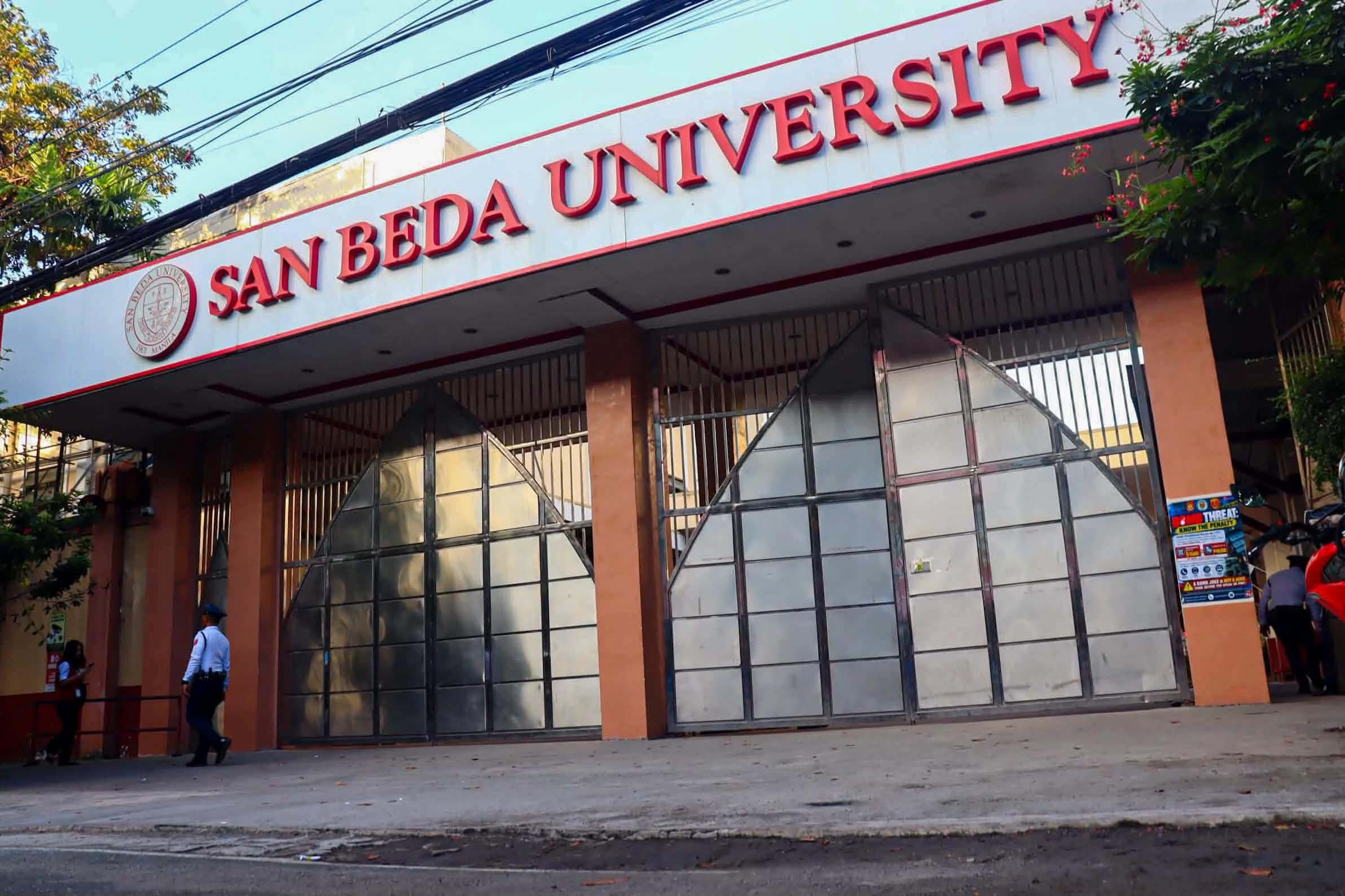
REPEATED CLASS SUSPENSIONS from August to September constrained the income of San Beda University (SBU) employees, notably third-party personnel under a “no work, no pay” policy, prompting calls for stronger personnel support amid perceived apprehensions over the anticipated effects of a “super El Niño.”
As class suspensions disrupt the academic calendar, their repercussions extend beyond academic operations with frequent off-campus operations, particularly during weather-related suspensions, echoing a sentiment of worry among employees as “super El Niño” looms with the same pattern of dilemmas–recurrent suspensions, stringent conditions, financial constraints, and a need for stronger institutional support.
In an interview with The Bedan, third-party personnel who requested anonymity described the economic impact of frequent off-campus reporting on their income. “… Naaapektuhan ang income namin. ‘Yung income na ‘yun, sobrang nakakaapekto sa budget namin, same sa iba na medyo malalayo pa ang lugar,” they shared, putting emphasis on transportation expenses that exacerbate their burden.
They highlighted how its frequency made it more burdensome, as suspensions often come in consecutive manner. “… Pinakamalaking epekto sa amin since may mga time na ‘yung suspensions umaabot na isa o dalawang araw na suspension na ‘di kami pumapasok…”
Delays in the suspension of classes were also noted, as these delayed suspensions made the situation more unfavorable for some employees, with their partial-shift duties accompanied by a corresponding “half–day” compensation, being barely proportionate to their transportation expenses.
The added burden of the rising cost of basic commodities was then cited as a primary contributing factor to their stronger need for support. “…bilang mo nalang sa kamay kung ilang araw ‘yung pinapasok mo… So parang pagkakasyahin mo nalang ‘yung budget na natira mo… ‘yung mataas na presyo ng bilihin… Imamanage mo talaga… hindi lang bilihin ‘yung masakit ngayon, kundi ‘yung transportation tumaas din…”
They stressed that their compensation, coupled with these trying conditions, fails to keep up with their living expenses. “Malaking kawalan sa amin ‘yung walang pasok dito, kasi ‘pag walang pasok, wala rin kaming puhunan… wala kaming budget… pagdating sa [inyong] upahan namin, ‘di naman katulad dito ‘pag wala kaming pasok, hindi tuloy ‘yung upa. Tuloy-tuloy rin ‘yung upa,” they accounted.
Grounding their account on existing measures of support available for struggling employees, third-party personnel mentioned the absence of in-place mitigating safeguards that cater to their realities—both in their respective agencies and at San Beda. “For agency kasi, wala kaming natatanggap from San Beda… Wala naman kaming natatanggap kahit masalanta ka ng bagyo or suspension, ilang araw [suspension]… wala kaming natatanggap,” they said, adding a call for the need for support: “…kailangan talaga nila ng tulong, kahit kaunti lang. Lalo na sa mga agency na may mga pamilya.”
San Beda College Union (SBCU) President Bernard Tayag shared the same sentiments, mentioning how the union has been lobbying for mandated salary increases and stronger institutional support amid the continued rise in the cost of goods, as union employees, who are San Beda’s regular employees, experience the same burdens as third-party personnel.
However, Tayag elucidated how the union can only represent regular employees, with third-party personnel falling outside the scope of the University’s employee union.
With third-party personnel bearing the brunt of both the recorded and anticipated repercussions, agency employees all seek a collective outcome: the existence of systemic support.
“…Sana mabigyan nila na kahit konting tulong para ma-cover ‘yung day na ‘di naipasok… basta may tulong, kahit paano may bigay.. kahit papaano, suportahan din ‘yung mga empleyado o agency… since nagtratrabaho lang din naman kami, patas-patas lang din,” they expressed.
With the record-breaking level of Super El Niño now underway, the possibility of further suspensions and disruptions is projected and remains a concern for the community.
Tayag puts emphasis on how the institution should consider programs that would support everyone in the community during these unfavorable climate conditions. “…Kailangan may programa talaga sila,” he said, as he mentioned how the University’s employees would bear the burdens of these severe weather conditions.
As the community continues to weather adversities brought about by both economic and environmental factors, employees of San Beda collectively amplify their call for action that addresses the realistic conditions of its employees.
“…urgent ito eh. Nangyayari na. Kailangan may aksyon na… Kailangan may tugon na talaga dahil nararanasan na natin… Kailangan na may aksyon at may maibigay na tugon ang management para matulungan nila ang empleyado nila,” Tayag addressed the University, emphasizing the need for consideration of Super El Niño’s adverse effects.
(with Jasmine Danielle Casadores)