
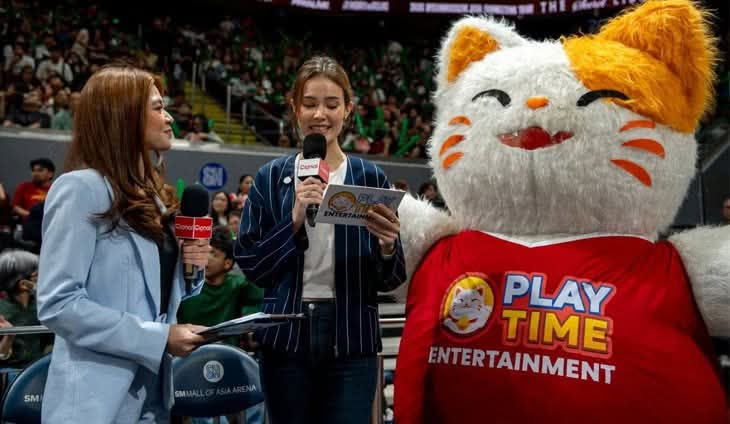
THREE DAYS AFTER PlayTime Entertainment was presented as the official entertainment partner and season presenter of the National Collegiate Athletic Association (NCAA) Season 102, with its branding and logo appearing during the season opener, the NCAA denied entering into an agreement with the gambling-affiliated company in a September 16 statement.
PlayTime Entertainment is a running entertainment and online gaming business, engaged as an online gambling platform. In the league’s released statement, its Management Committee (ManCom) claims that no agreement had been executed and no signing of any kind had taken place, calling any claim of a partnership inaccurate.
PlayTime Entertainment, on the other hand, presented itself as the league’s official entertainment partner and season presenter, with company president Roy Alcid describing the arrangement as PlayTime’s official entry into collegiate sports. Adding to this, on September 14, reports were published that the company had signed a sponsorship deal with the league.
During the league’s opening, held on September 13 at the SM Mall of Asia (MOA) Arena, the company’s logo appeared multiple times. Moreover, before the host University’s opening game and during its halftime segment, a portion by PlayTime Entertainment spokesperson Adela Mae Marshall was aired.
Reports from various news platforms surfaced that ManCom had earlier rejected the company’s proposed sponsorship. According to the report, an agency commissioned by the league negotiated with PlayTime and went directly to Cignal TV, which was unaware of the rejection. The source then said the league has since opened an investigation.
Pauleene Visaya, Athletics Committee Head of the College of Arts and Sciences (CAS) Student Council (SC), shared that she first learned of the controversial partnership only at the season opener.
Visaya expressed dismay in the partnership upon finding out about the controversy, averring that sports should teach “discipline” and “being responsible,“ and that a company affiliated with an online gambling platform does not fit a league whose broadcasts are viewed by young audiences.
On the discussion of continued partnership, Visaya said it is inappropriate for such platforms to be advertised in the collegiate league, especially with the host school extolling Benedictine values.
“What are the values we endorse alongside the brands in the NCAA? As a Bedan, this distinction matters to me,” she said.
The online community, especially Bedan supporters, then raised concerns on ethical considerations behind the partnership.
In a post made in a Facebook group by Bedans, named Tunay Kang Bedista (TKB), Bedan alumnus Niko Sy shared his sentiments that the sponsorship does not align with “Bedan values” and could “tarnish the reputation of our Bedan community and [to] the whole NCAA family.”
He further rejected any distinction between PlayTime’s gaming and entertainment arms, describing such contrast as “a form of circumvention,” and called on the religious pillars upholding Benedictine values, the University’s ManCom representatives, and alumni to issue statements disapproving of the involvement with the company.
After the NCAA’s denial, Sy updated his post to say that the denial “clearly contradicts what [are] posted,” alluding that such action “shows a lack of accountability [&] transparency of the NCAA Management Committee, or a possible oversight [&] mismanagement on their part.”
On September 15, anti-gambling advocate Carlo Ople published an open letter to NCAA Philippines on Facebook, concluding that the deal was already sealed in the face of the league’s denial. “Kailan pa naging okay ang pag-promote ng sugal sa mga eskwelahan?” he asked, stating that it “offends” him “as a Filipino, and as a human.”
As college students commonly fall under the age range wherein involvement in online gambling is illegal and detrimental, Ople asserted how online gambling firms are beginning to target Filipino youth and asked why educational institutions should serve as a “Trojan Horse” for gambling. He also questioned the rationale behind the NCAA and its member schools, placing an emphasis on San Beda as the host.
As of press time, there has been no substantial developments on the matter, with the released statement by the league being the last official response to the controversy.