
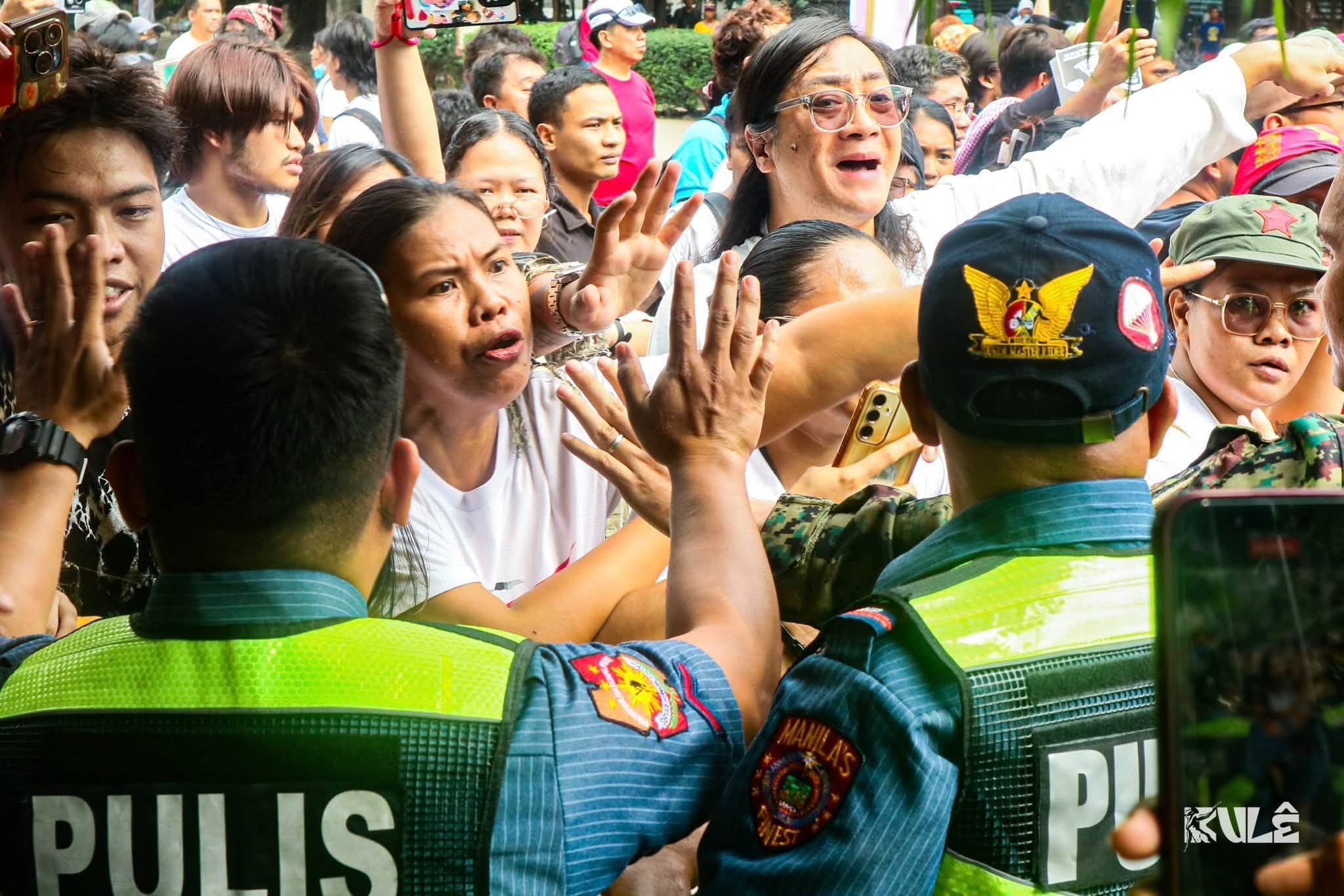
HUNDREDS OF DELEGATES from the Lakbayan ng Pambansang Minorya (LAKBAY) were arrested by the Philippine National Police (PNP) during the Lakbayan ng Timog-Katagalugan 2026 protest at Sucat People’s Park on November 15, as they marched toward Liwasang Bonifacio to establish a protest camp amid the Philippines’ opening ceremony as host of the 49th Association of Southeast Asian Nations (ASEAN) Summit.
The delegates, composed of farmers, workers, Indigenous Peoples (IPs), members of urban poor communities, and the youth from Southern Tagalog, began their mobilization on November 12 to bring their sectoral struggles and demands to the National Capital Region (NCR).
The movement sought to advance calls for land and livelihood rights, environmental protection, and social justice, while opposing economic initiatives such as Pax Silica and the proposed Luzon Economic Corridor (LEC), which participating groups said threaten marginalized communities.
According to the Gabriela Women’s Party (GABRIELA), those arrested included Southern Tagalog delegates, GABRIELA members, and at least 40 delegates from the NCR. Nine additional activists were also arrested at Liwasang Bonifacio in Manila while participating in a separate mobilization toward the summit venue at the Philippine International Convention Center (PICC).
As the delegates from Southern Tagalog began their 70-kilometer march of protest towards Liwasang Bonifacio, the demonstration was met with violent police intervention, resulting in the mass apprehension of protesters, including members of campus publications and student journalists at Sucat People’s Park.
In a Facebook post, Bagong Alyansang Makabayan (BAYAN) Secretary-General Renato Reyes Jr. reported that around 300 protesters were arrested in Sucat and 21 delegates from Central Luzon were detained in San Rafael, Bulacan.
In the same post, he also condemned the police violence against protesters and questioned the authorities’ actions, including the alleged arrest of demonstrators and the denial of access to legal counsel and the Commission on Human Rights (CHR).
Reyes then called out Department of the Interior and Local Government (DILG) Secretary Jonvic Remulla, PNP Chief Nartatez, and President Ferdinand “Bongbong” Marcos Jr. as responsible for the incidents, describing the mass apprehensions as the “biggest mass arrest in a single day under the Marcos Jr. regime.”
Following the apprehensions, reports emerged of police officers blocking the delivery of food and toiletries from the families and legal teams of detained journalists and activists at Camp Bagong Diwa in Taguig City.
The situation prompted concerns over the detainees’ welfare and their right to legal assistance, particularly as families and lawyers sought access to those apprehended during the demonstrations.
GABRIELA Philippines subsequently called for volunteer lawyers and paralegals to provide legal assistance to those it described as victims of police brutality and illegal arrests. The mass arrests further raised concerns over the safety of campus journalists and media workers covering the demonstrations, as members of campus publications and alternative media were among those affected by the police operation—with three student journalists reported to be injured during the incident.
The incidents prompted calls over the exercise of constitutional rights, particularly freedom of expression, peaceful assembly, and press freedom; the right to document public demonstrations remains essential to ensuring public access to information, especially during events involving state authorities and the exercise of civil liberties. The mass arrests have since drawn scrutiny over police misconduct and the government’s handling of public demonstrations, particularly concerning the treatment of detainees and the protection of journalists covering the mobilizations.
As of press time, the delegates remain detained with no formal charges yet filed. The public is urged to extend support, either legal or financial, along with calls for forms of donations to help the detained delegates and those affected by the arrests.