
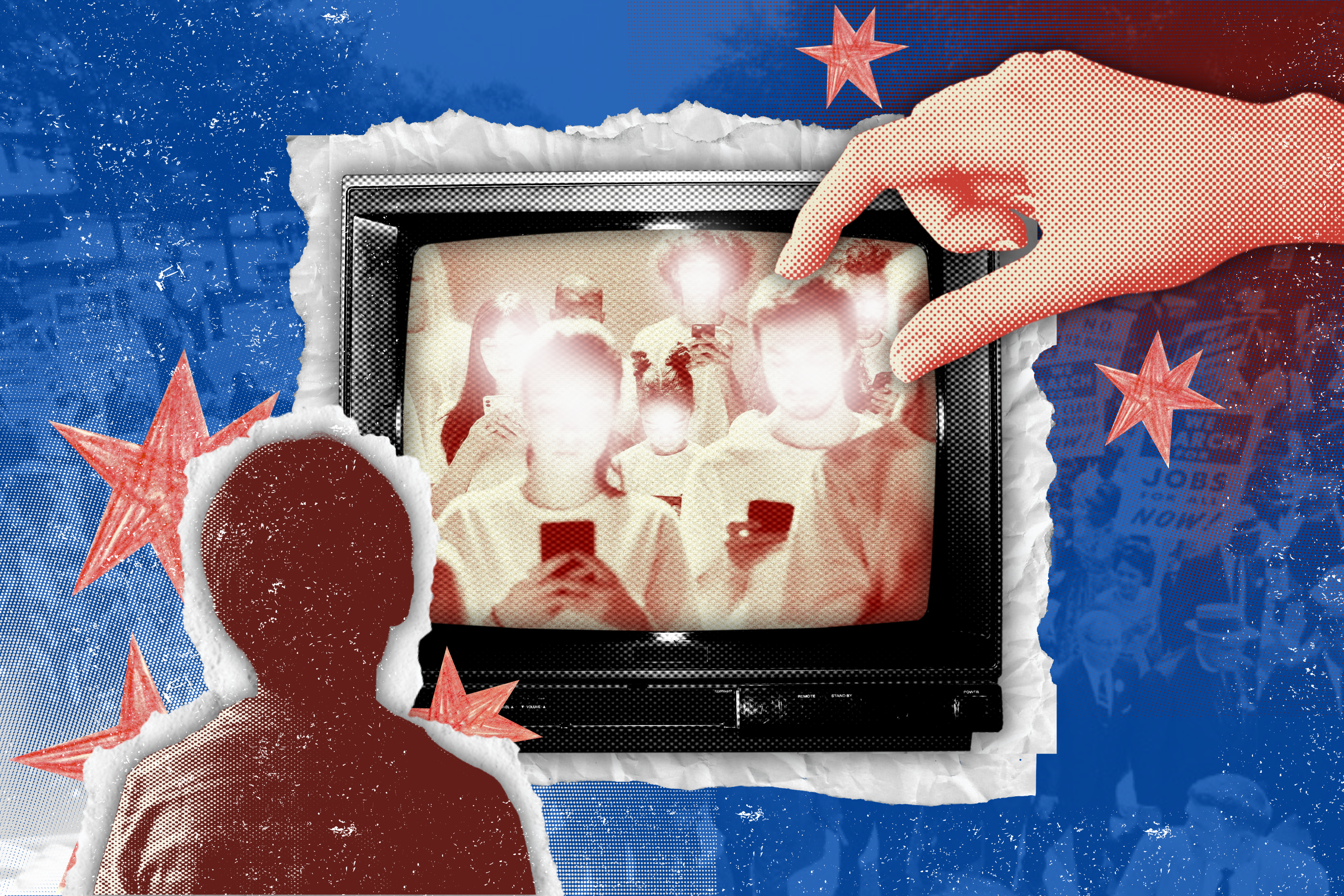
ON THE FIELD of warfare, the battle for truth rages on in the digital landscapes as veracity is diluted in the shadows of deep-rooted disinformation, shaping misinformation to flourish in the cyber public sphere. While the world shifts to its contemporary fashion, social ills persist in their modern forms in far-reaching avenues, placing the truth under siege.
In today’s global order, avenues of information dissemination have been weaponized as tools for social control. The aftermath of the rise of disinformation shapes and delivers the world to a more solidified number of misinformation casualties—a figure enough to undermine the democratic essence, and one that continues to thrive and prosper.
Treading amid the shift
The proliferation of this contemporary issue brings about threats that entail the urgency of the war on truth, as the disparity between falsehoods and truths weakens.
Sean Audric Uy, a senior from the Department of Political Science and President of the Social Sciences and Humanities Association (SSHA), highlighted the danger of how the use of systematic algorithms, one of the digital mechanisms in the virtual realm, can isolate users within their biased information bubbles, limiting the reception of information.
Accordingly, Nicko Gabriel Dela Vega, a sophomore from the Department of Legal Management, echoed these remarks as he stressed the prevalence of fake news in the virtual domain.
He also reiterated how there exists a call to action for measures to be employed, posing the skill of truth discerning as a duty to be embodied, asserting, “It is our duty to learn how to filter through it… We have to have literacy in knowing what is actual and what is not factual.”
Weighing state necessity
With these substantial shifts that come along with threats, Dela Vega infers the presence of designed mechanisms constructed to combat these threats in the form of community notes and independent fact-checkers. However, he claimed that these mechanisms were not enough
Mr. Jocel De Guzman, Co-founder and Lead Convenor of Scam Watch Pilipinas, has an aligned sentiment on the effectiveness of such mechanisms.
“Well, we already have regulations…But we need a lot more… We need more laws through legislation. We need policies for the government agencies,” he said.
Recently, the Tri-Committee (Tricom), consisting of the Committees on Public Order, Public Safety, and Information and Communications Technology, summoned various social media personalities, the majority of whom are supporters of former President Rodrigo Roa Duterte, who allegedly engage actively in spreading intentionally fake news on social media.
The Tricom, the first congressional public hearing conducting inquiries centered on the issue of the prevalence of fake news, was integrated to construct a regulatory framework to decrease or mitigate the threats of the weaponization of social media and the rise of troll networks.
Prof. Carmelo Rico S. Bihasa, an esteemed Political Science professor and author of foundational texts on political studies, teaching Public Administration at various universities, shared the same outlook as he acknowledged how there is no universal way of combating disinformation now.
He believes that the government would eventually legislate a policy which will identify and will penalize people behind disinformation, out of the inevitable needs of the evolving world. “In the process, they would be able to come up with a policy to recommend, probably on how to deal with it,” Prof. Bihasa stated.
Still and all, Prof. Bihasa puts weight over and above the angle that the government should necessarily consider the consummate flower of all liberty—freedom of speech and expression—in legislating this policy.
“That’s one thing that the government should be looking at. Kasi while we are making, what we call policies, we should not sever what they call some basic rights of individuals, right to information and the right to probably to speak our mind…those things, and the government must be able to bridge between that concern and its interest to come up with ways on how to contain these fake news,” he explained
Alongside this, Atty. Hannah Barrantes, a former faculty member from the Department of Legal Management, conveyed her affirmation in the crafting of legislation aimed at countering the prevalence of disinformation.
“I will vote for people who can do that law kasi we should start first. Kasi ‘yan ‘yung problem ng lahat,” concerning disinformation being a hindrance to the proliferation of information and undermining democracy.
Perceiving the fake news epidemic
The prominence of presence in the digital political realm is not newly associated with former president Rodrigo Roa Duterte. Several studies have found that social media has been a key player in Duterte’s political trajectory.
Following his recent arrest, by an arrest warrant issued by the International Criminal Court (ICC) on charges of crimes against humanity related to his bloody war on drugs campaign, the digital political realm was swayed into political divisions of narratives, with a mix of both faulty and factual portraits, with an alarming number of faulty portrayals.
The proximity of disinformation was intensified after the former president’s detention, twisting the truth and steering the public narrative. Numerous fabricated claims and narratives proliferated across the digital realm, which downplayed his arrest and the reason behind it. Forged statements of support for Duterte from several known personalities, including fictional personalities, were spread, as well as made-up stories of how the current First Lady, Liza Araneta Marcos, was involved in a controversial death case.
Information that suited the ideological and political stances of Duterte circulated, depicting his arrest as politically motivated, with claims that undermined the truth of his arrest and the legal mechanisms. The algorithms that enable disinformation to thrive in the digital realm expose people away from the truth and push them toward false narratives.
Uy asserted the gravity of this phenomenon as he highlights the significance of narratives as the central point of forming our identities as Filipinos, stressing the deemed consequences of the existence of false narratives clashing with the sole real narrative.
Stirring the political terrain
The world had entered the information age, riding along with it the dangers of the lack of sufficient mechanisms for addressing contemporary issues. With the pervasive peril of the age of disinformation, the social fabric of how society works erodes.
The proliferation of fake news, especially politically motivated fake news, has profound consequences that fatally touch the political landscape, whether on a local or global scale.
Uy contended that different forms of disinformation negatively and substantially affect the political landscape, stating, “Nagiging unstable ‘yung political landscape because of these nag-e-emerge na mga gimmicks or mechanisms.”
Dela Vega emphasized this point as he expounded on how disinformation dilutes the sanctity of truth. “Sabi nga nila before, repeat a lie enough times, it becomes the truth because once you hear a lot of people saying it, like the trolls, it becomes embedded in the mind of the majority. So, by affecting our way of truth, democracy is affected because democracy is realized on shared truths,” he stated.
He also illustrated the future consequences, stating, “If we continue further down this path and other countries, other nations, continue to follow suit, we’re headed for political turmoil.”
Prof. Bihasa then voiced how this societal concern may be a question of age, as younger individuals tend to be more discerning and tech-savvy when it comes to identifying misinformation than the older generation.
As such, he emphasized that it still boils down to a question of willingness and the ability of fact-finding. “So, it’s a question, more than the age, it’s a question of really if you can do some researching to check whether or not those facts are believable,” he stated.
Watching over our truths
Digital innovations had fundamentally started as a force for good. Rykel Castro, a first-year student from the Department of Psychology, shares, “It’s really helpful na ma-utilize natin ‘yung mga ganung klaseng platforms to spread information about what’s happening in the current time.” However, it is evident how arising issues on these digital platforms pose negative lasting effects on media domains, shadowing the essence and power embedded in truth.
As the ongoing war on truth is witnessed, the call to action needs to be answered. Prof. Bihasa narrated this prompt, stating, “We have a lot of things to do, alright. One, my perspective, I would need to do more to educate my students. And then, students, at the same time, should also be complementing these things.” He accentuates how capabilities and responsibilities are anchored in the role that one plays in society.
Uy and Dela Vega affirmed his statements as they illustrated how the youth have a role to play and the power to do so in combating this war on truth. Uy points out how the prevalence of disinformation is a collective fight, asserting, “It’s also going to be a collective effort. Hindi kaya ng isang tao ‘yan dahil ang kalaban natin ay systematic.”
Atty. Barrantes then remarked how this battle should collectively be fought, starting from the professionals shedding light found in truth within their knowledge to resist the proliferation of lies, elaborating, “The only way for us to really fight this is for professionals to fight back using the same platform…It’s high time for professionals to step out of their comfort zone and break down this complicated information for it to be consumable to the masses.”
In this war on truth, the truth doesn’t always immediately prevail, but what must be remembered is how it will always prevail in the end. Even when drowned by its opposite, distorted to favor someone, or delayed by doubt, absoluteness lies in how truth is relentless—it persists, it endures, and it liberates. Let this be the call to seek it, to defend it, to speak it, and to live by it—indomitably.
(with Prince Piolo Tagarino and Benedict Asher Ugaddan)