
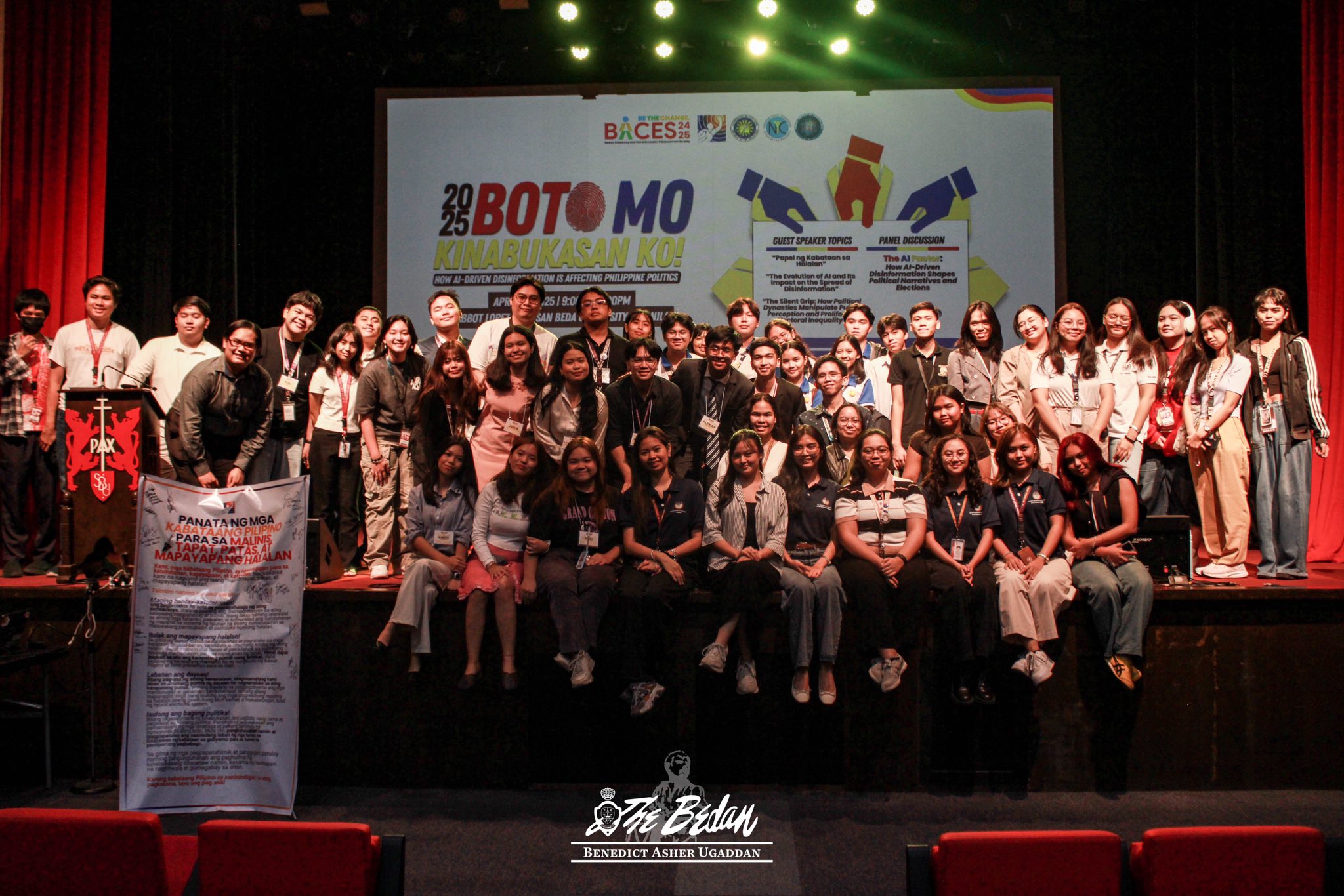
THE BEDAN ADVOCACY and Consciousness Enhancement Society (BACES) hosted the “Boto Mo, Kinabukasan Ko! How AI-Driven Disinformation is Affecting Philippine Politics” summit at the Abbot Lopez Hall last April 22.
The event featured notable speakers who discussed pertinent issues such as disinformation, political dynasties, scams, and the importance of maximum youth participation in electoral processes.
Aldrich Rivera, the President of BACES, emphasized the organization’s intent to go beyond traditional voter education efforts by addressing more current and pressing concerns.
“There have already been numerous voter education programs that speak in a similar tone. We want to try and catch on with the ever-evolving issues in our society, particularly disinformation and how it affects our society and the upcoming elections,” Rivera stated.
Additionally, Rivera underscored youth empowerment and engagement as the event’s primary aim, saying “We aim to empower the youth to be vigilant and proactive in protecting the truth, ensuring that our future is guided by informed choices rather than manipulated narratives by those seek their own personal gain.”
The program opened with a discussion from Mr. Allan Tan, CEO and AI scientist, who discussed the fast-evolving nature of AI and the threats that come along with it, given the imprecise ethical boundaries present to regulate these.
The afternoon session of the program was a panel discussion that shifted the focus to the challenges brought about by online misinformation and Artificial Intelligence (AI) manipulation.
Mr. Josel De Guzman, the Co-founder and Lead Convenor of Scam Watch Pilipinas, addressed the importance of digital discernment, especially among the youth today. He urged individuals to be “more cautious and selfish” of their personal information and display a “snobbish attitude” toward suspicious online content.
In addition, Ms. Mel Migrino, the Chairman and President of the Women in Security Alliance Philippines, pointed out the paradox that while Filipinos display confidence in identifying scams, the country remains as one of the highest-ranking Asian countries susceptible to several scam-related incidents.
Notably, Mr. John Carlos Aquino, the Technical Head of Task Force Katotohanan, Katapatan, at Katarungan, described AI as a “double-edged sword”—emphasizing that, while AI can be a tool for social and political progress, it also presents risks, specifically its potential to manipulate political narratives and overall public opinion.
Mr. Brell Lacerna, the National convenor of Kabataan, Tayo ang Pag-asa, highlighted the importance of youth education in combating digital misinformation. As a student and as a representative of the youth, he also addressed the issue of ‘red tagging’ and how it poses a threat to political dissent, individual rights, and freedom of expression.
In an exclusive interview with The Bedan, Mr. Lacerna emphasized the importance of moving beyond conventional viewpoints and implementing a more militant approach rooted in grassroot movements.
“The youth must take away the traditional views of the youth and embody militancy coming from the grassroots,” he quipped.
Moreover, he implied that reforms vehemently expressed by the youth should consider communities such as farmlands and factories as “true knowledge” for such a thing is derived from these marginalized sectors.
This notion was then followed by Dr. Julio Tehankee, who emphasized on how political dynasties shape the trajectory of the Philippine political landscape which affect these subjugated groups.
Dr. Tehankee highlighted the “power-treatment effect” which tackles how the longevity of political clans in power yields success towards more recognition and connections, making it difficult to dismember. He also sought that the only way to cease such a problem is through change in reforms.
“Akala natin nasa demokrasya tayo, pero hindi pala,” he said, pertaining to and addressing the limited choices of qualified candidates of individuals in electing public officials.
Given the current state of the Philippine political system, particularly with the division of the elite, he concluded how this presents an opportunity for the people, as the “forces of change,” to harness progress and reform with youth empowerment driving the change they hope to see.
Rivera also stressed the significance of shedding light on finance issues and budget deficit and how they are affecting student initiatives.
Discussing the challenges of organizing the event, the BACES President placed strong emphasis on the financial struggles that the organization encountered, sharing that the budget cuts to the non-professional organizations were “unforeseen” and were “detrimental to the event’s success.”
“We were told that the remaining funds had already been exhausted due to major events like the Sportsfest, Integration, and the Concert. This sudden cut made it difficult for us to push through with our planned activities,” said Rivera.
The summit highlighted the collective efforts to navigate challenges in an increasingly digital and politically complex era. It examined the dynamics of this environment while continuing to engage the youth in initiatives that promote civic participation and social change.
(With Aliyah Buene D. Aya-ay)