
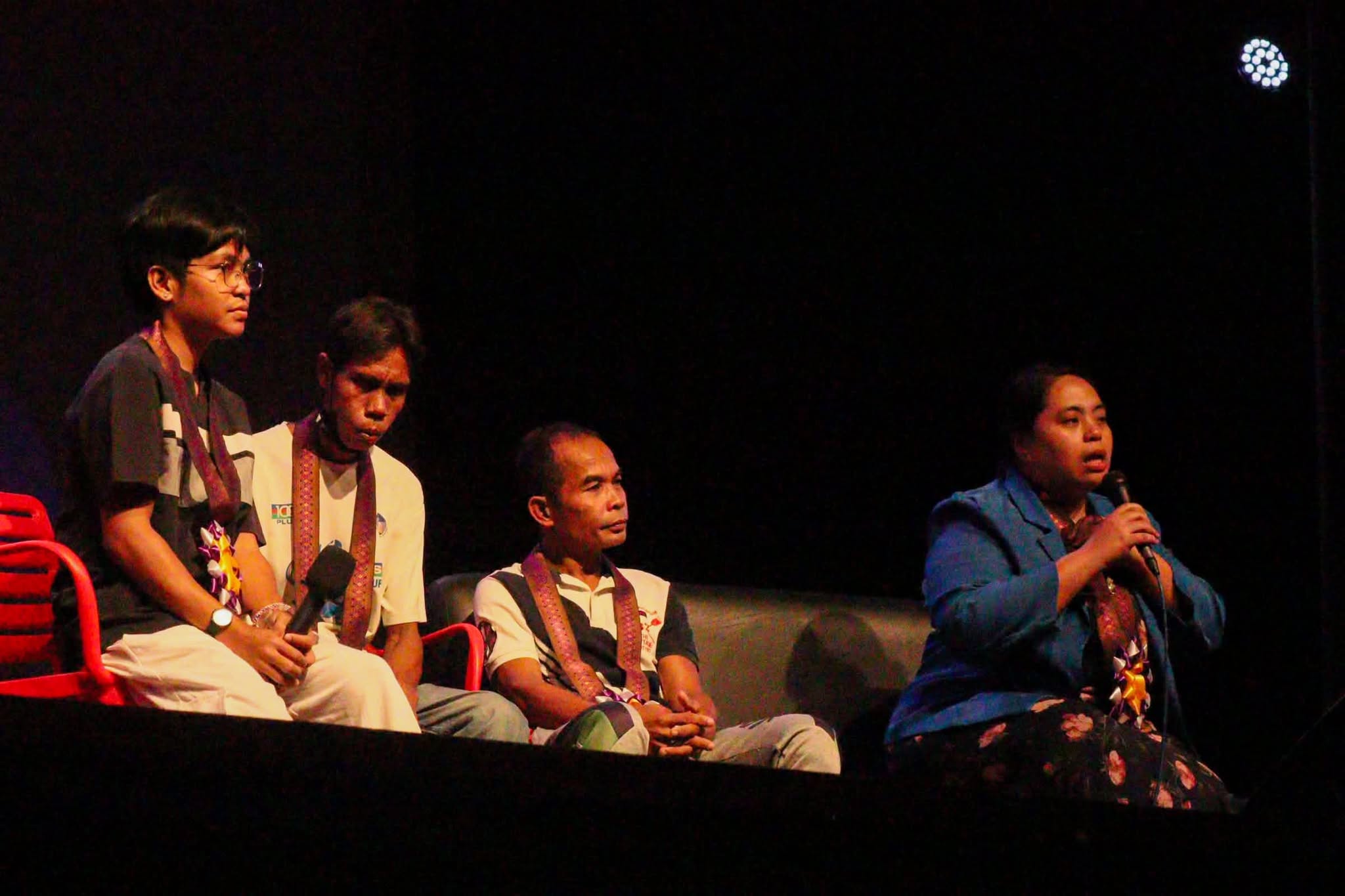
INDIGENOUS LAND STRUGGLES took center stage as the College of Accountancy and Business (CAB) Student Executive Council (SEC) and the College of Arts and Sciences (CAS) Student Council (SC) held “Our Land Is Our Life, Our Life Is Our Home” at Abbot Lopez Hall on November 9, seeking to deepen students’ understanding of the contemporary struggles faced by Indigenous communities through informative talks, panel discussions, and a commitment signing.
The protection of ancestral domains remains a longstanding concern among Indigenous Peoples (IPs), whose territories and livelihoods have come under pressure from development and resource extraction projects.
Among the initiatives prompting renewed scrutiny is Pax Silica, a United States (U.S.)-led effort to strengthen strategic supply chains for critical minerals, semiconductors, and other advanced technologies through the extraction of natural resources in a proposed facility that would compromise ancestral lands.
The event centered on raising awareness of the collective struggle in relation to ancestral lands with an objective to foster solidarity amongst our IP brothers and sisters whose rights are impeded.
Women and Children Committee Head of the National Union of Peoples’ Lawyers (NUPL) Atty. Katherine Andreza Panguban led the discussion as she talked about the struggles of IPs, which persist and continue to exacerbate up to the present period.
Ryan Serquiña of Katribu Youth, a group proponent of IP rights and representation, then discussed the threats that come with the execution of the Pax Silica initiative, raising concerns over the extraction of critical minerals from territories historically inhabited and protected by Indigenous communities.
For Serquiña, the implications of Pax Silica extend beyond Indigenous communities, placing the country’s sovereignty and control over its natural resources at stake.
“Hindi ito problema lang ng mga katutubo. Problema natin itong lahat dahil sa pagpasok nitong Pax Silica Initiative, sovereignty, interdependence, ng ating bansa ang nakasalalay,” he said.
Serquiña likewise highlighted the disparity between online engagement and actual participation in collective action, observing that public expressions of concern do not always translate into tangible support for affected communities.
“Maraming vocal sa social media pero pagdating sa on-ground, medyo mababa ‘yung numbers, mababa ‘yung mga lumalahok sa mobilizations, mababa ‘yung magpapaabot din ng mga tulong,” he expressed.
Further underscoring the need for an alternative development agenda, Serquiña argued that opposition to the initiative must be accompanied by proposals grounded in genuine agrarian reform and national industrialization.
SEC Chairperson Shara Chrisly Esteba in her address, emphasized the responsibility that comes with the privilege of receiving an education, particularly in recognizing and responding to the struggles of marginalized communities.
“Your privilege is a responsibility. It’s a call for you to act and to help other people,” she said, urging students to translate awareness into meaningful participation.
SC President Beige Benedict Campbell likewise called on students to extend the discussions beyond the University and bring the concerns raised during the forum into their respective communities. “Nawa’y maging panawagan ito… Hindi lang matapos dito sa forum natin, ngunit lumabas sa apat na sulok ng establisyementong ito.”
Serquiña further underscored the importance of placing the country’s “natural resources” at the service and for the “benefit of its people, not for other foreign countries.“
The event concluded with the councils officially sealing a partnership with Katribu Youth through a commitment signing, pledging an alliance with the IPs and their continued fight for their rights and representation.
(with Russell Labor)