
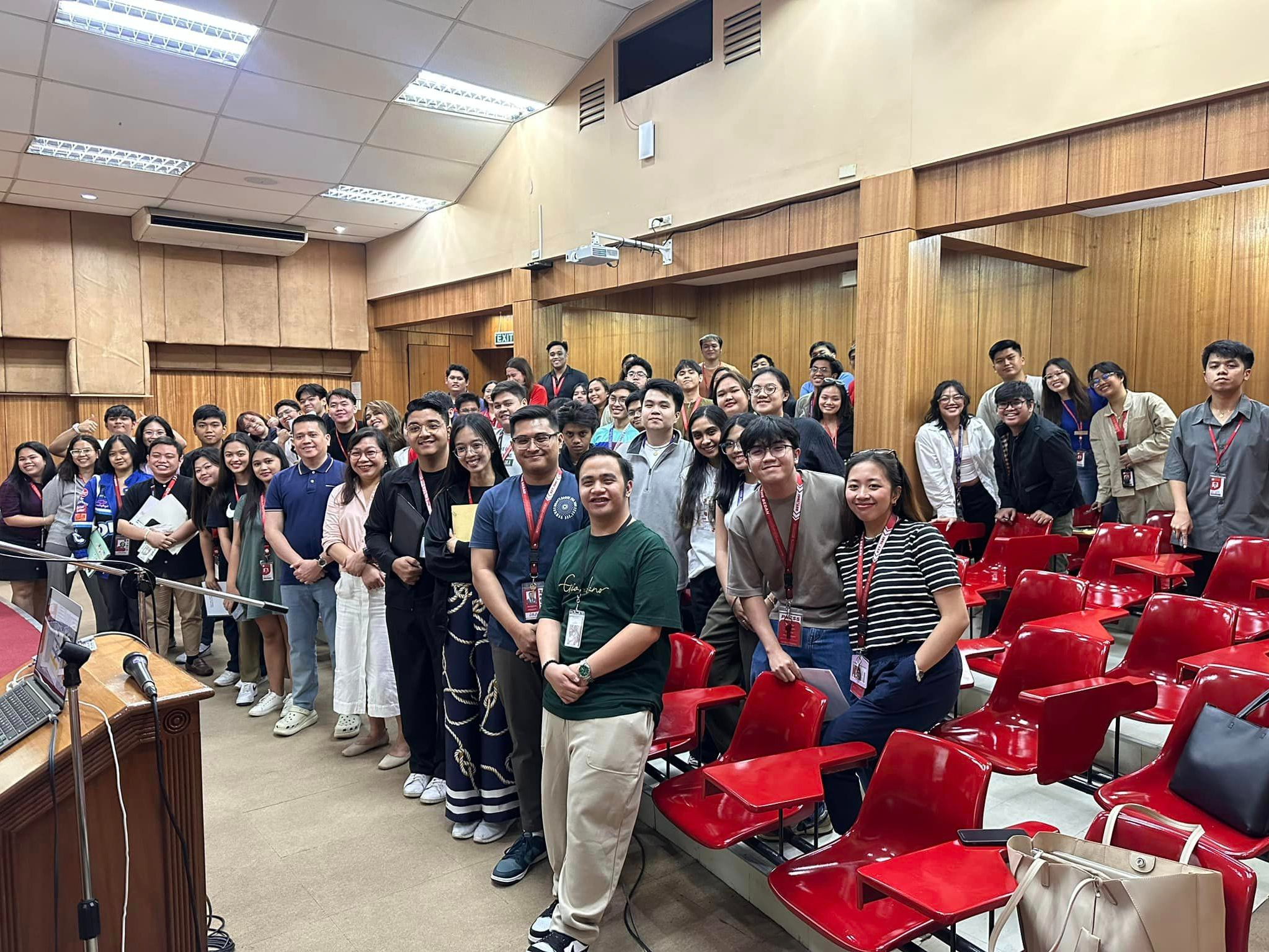
SEEKING REDRESS for issues faced internally, numerous professional and non-professional organizations of the College of Arts and Sciences (CAS) raised concerns at the General Assembly, last May 8, over the prevalences of absent auditor positions in the Student Organization Circle (SOC).
“Palagi siyang na-blangko, or in the long run, parang nawawala sila, parang nag lay low sila sa organization,” shared the President of the Bedan Business Spectrum (BBS), Anthony Navarro, concerning the fragility of auditor roles within student organizations.
This is not an isolated case as other organizations have faced similar grievances raised by the presidents from the Bedan Pastoral Ministry (BPM) and the San Beda English and Literature Society (SBELS).
Sharing the issues that they have encountered on the matter, Allysa Tenefrancia, the President of SBELS, divulged that the lack of a designated officer for the auditor position had “caused complications procedurally” in the conduct of activities, “the events prior to the SOC general assembly were a bit hectic to say the least. We were actually dealing with the event that we are conducting outside of the campus which kind of threw us into a loop,” added Tenefrancia.
Similarly, Jestony Lumabi, the President of BPM, verbalized the difficulty of the instances where an officer would have to handle the workload of two executive positions at a time, he said “ito yung problema namin ngayon na meron kaming event na malaki, I have now the challenge na itong treasurer ko, na naging auditor rin at the same time, na siya rin sumalo sa pagkuha ng pera and sa auditing rin.”
Additionally, Navarro articulated that paper processing has been “strenuous” given the issue at hand. He highlighted the “difficulty in the processing of papers” as most of the funding of BBS’ events were not liquidated properly. They are now facing the “problem of the designation of roles and responsibilities in auditing and liquidating” following the absences of the auditor and treasurer.
These issues on hand call attention to the imperative role of auditors within organizations. Despite the weight and complexity of the position, a recurring problem, as observed by representatives of various organizations, would be the lack of guidelines laying down the role and proceedings of the auditor position—providing instances where, due to the lack of job descriptions, students would assume the role of auditor without the necessary preparation.
“I believe that the role of the auditor is a really difficult position, as they are the ones who handle a lot of things after an event. There may be some cases in which people assume the role of the auditor is an easy job, but it is exactly the opposite,” said Tenefrancia.
Coinciding with this, Navarro asserts “I believe na hindi lang siya one man job ang isang auditor, ang auditor kasi is reliant sa trabaho ng treasurer… si treasurer talaga ang magpprepare nating liquidation report whereas si auditor is magbibigay ng assurance dun sa liquidation report ni treasurer”.
Suggesting precautionary measures that should be taken in the future to ensure the stability of auditor positions, Tenefrancia mentioned the importance of “properly relaying the job description of being an auditor”.
Navarro further attests that the systems and processes in auditing are not communicated properly which leads to those in the auditor position to resign early. “Hindi siya masyadong na-communicate sa ating auditor kaya sila umaalis kasi hindi nila alam kung ano yung gagawin nila.”
He also mentions the burden on first time auditors of not knowing which offices to approach, as well as which people to contact with regard to paper processing. Likewise he suggests that “what we can do is provide a procedural manual” to properly delineate the role and work of auditors within organizations.
Sharing his approval for possible solutions suggested by the Student Council (SC) to maximize the utilization of resources and ease paper processes, he mentions the VAT 2.0, sharing “I see different solutions talaga for these kinds of issues, kagaya lamang ng naririnig ko na VAT 2.0 wherein i-oopen na lahat ng revision processes natin ay gawing online, which is I agree na dapat lahat ng mga assignatories may approval din as well sa mga papers dun… ang problem kasi natin, is that palagi tayong papunta punta sa student council, iiwan yung documents tapos mawawala, tapos what if we do it online… if ever ma-maximize talaga yung VAT”.