
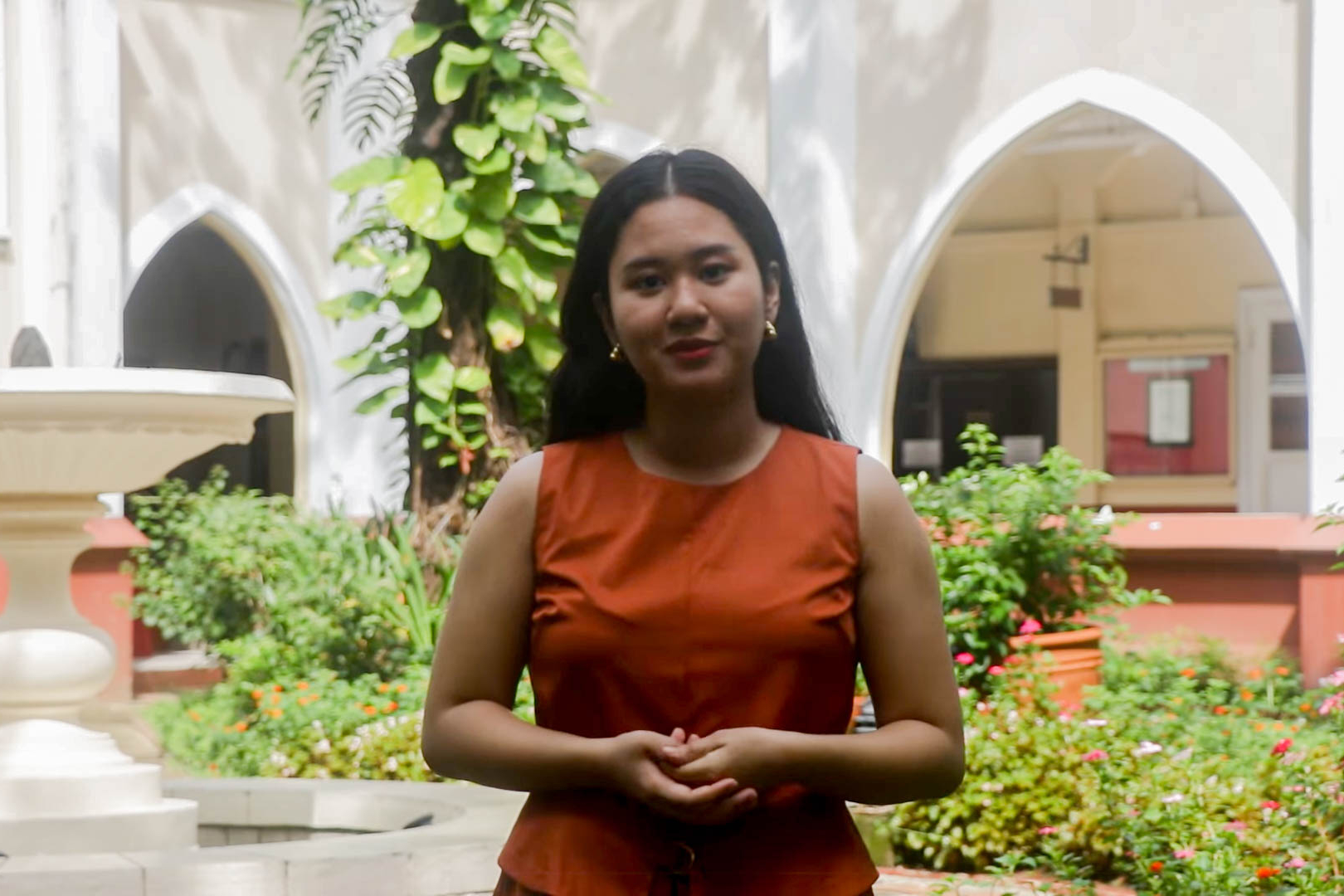
“NAVIGATING THE PATH towards healthier conversations,” the Psychology Society of San Beda University (PSSBU) premiered a five-episode series last September 10-14 with the theme “Changing the Narrative and Starting the Conversation,” commemorating World Suicide Prevention Day (WSPD).
Aligned with the global initiatives of the International Association for Suicide Prevention (IASP) and the World Health Organization (WHO), PSSBU sought to “amplify greater social consciousness on the realities of mental health problems on individuals to encourage open and meaningful discourse within the Bedan community.”
PSSBU President, Precious Aira Encina, articulated the organization’s commitment to “leading initiatives addressing the stigma” around suicide whilst promoting collective progress and action in “fostering awareness of its alarming toll.”
Such advocacy led to the realization of the WSPD series and its foundational themes: Empathy, Awareness, Accessibility, Presence, and Responsibility. These, according to Encina, were the “frameworks” that fostered greater awareness on the subject of suicide.
Each episode of the series featured representatives from various student organizations with the collective aim to “gather diverse perspectives on how suicide prevention impacts and strengthens the foundations of the communities they represent,” Encina explained.
The Student Council (SC) and members of the Student Organization Circle (SOC), namely AIESEC San Beda, Bedan Advocacy and Consciousness Enhancement Society (BACES), and the Bedan Pastoral Ministry (BPM), were invited to partake in the series and offer their knowledge and insights.
PSSBU’s pilot episode, released last September 10, spoke on “safe spaces” as a manifestation of “empathy.” It answered the question of how one can become a safe space for others outside a student setting. “To become a safe space is to become an empathic person. And to become an empathic person does not require you to be enrolled in a specific degree or take licensure exam of some sort,” Encina expressed.
The next episode, in line with “awareness,” was released the following day. Janine Simbulan, AIESEC’s Vice President for Internal Affairs, voiced about the “ocean of problems” that student leaders also struggle with, and that their “problems don’t only encompass academics… [they also include] problems–family problems, personal issues, political issues… and many other factors.”
She stated that “in understanding these factors, we must campaign and… advertise the advocacy of mental health issue.”
Moreover, BACES’ Publicity Officer Julla Francisco, discussed the “accessibility” of materials and resources in the third episode posted on September 12. According to her, “there’s been research that…suicide and depression…can be related to…socio-economic status or SES. Apparently… poverty is associated with… suicide and pessimistic attitude especially in children and adolescence.”
As such, she explained their importance in creating effective strategies towards that point to suicide prevention, declaring the necessity of “including the marginalized and oppressed sectors” in the conversation to develop economic and social empowerment within these areas.
In the fourth episode released on September 13 under “Presence,” BPM’s Executive Coordinator for Worship and Liturgy, Jestony Lumabi, illustrated the role of faith in suicide prevention.
“[The Church is] not just being mental health partners, but also they are giving you ways on how to view, as a person, to transform yourself and create a new life again,” he justified, adding that the Church is “creating ministries and organizations” that focus on suicide prevention.
“There really is no specific cure towards our mental health issues,” SC President, Mari Okol, emphasized in the final episode depicting “Presence,” that was aired on September 14.
And yet even despite having no clear cure, Okol affirmed the “presence and role” of the SC which “extends beyond spearheading events.” Rather, for her, they “embody the responsibility of building a community that actively participates in actions” that prioritize societal welfare, where mental health conversations are “welcomed and encouraged.”
Even after the WSPD series, Encina shared that PSSBU “intends to spearhead activities that will create many opportunities for the Bedan community to expand their mental health awareness while also becoming active agents of mental health advocacies both inside and outside the San Beda.”
And truly enough last October 10 and 14, under Eunoia: Bedans as an Epitome of Optimism, PSSBU launched activities pertaining to Mental Health Day through posting publication materials related to the dedicated day, along with enjoining the community to “showcase the beauty of optimism, resilience, and hope” through a mobile photography contest.
(with Ma. Casandria Mallen Manao)