
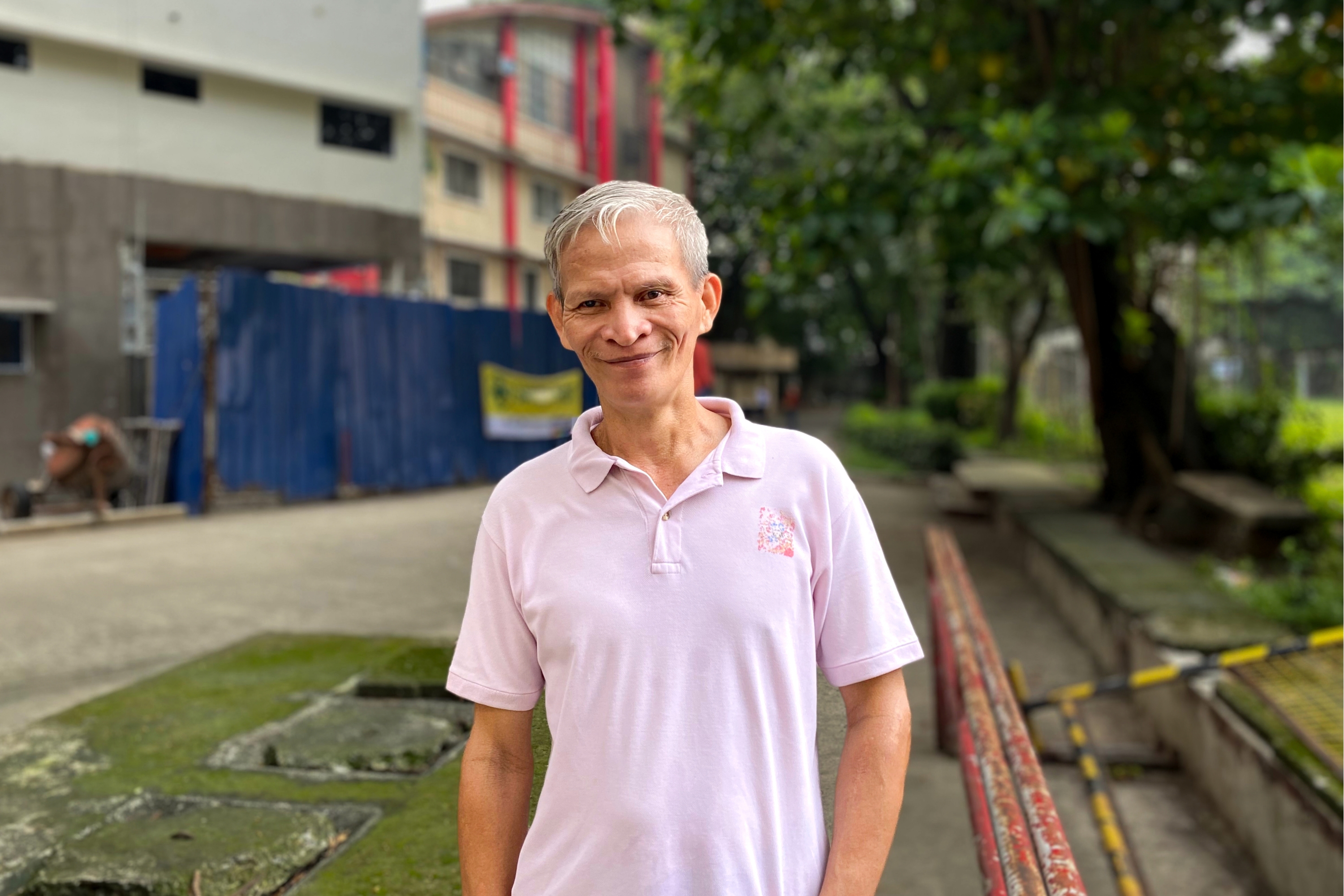
“GOOD MORNING, DOUBLE time”— the voice that cuts through the quiet of the athletes’ dorm does not belong to a coach, but to Michael “Kuya Mike” Zaldivia. For some athletes, his familiar call means one thing: get up, move faster, and get ready. But for Kuya Mike, “Double Time” is more than a command—it is a call that starts each day in the pursuit of excellence.
Unbeknownst to him, his everyday line would become the endearing nickname the athletes gave him, “kuya double time,” and, perhaps unknowingly, the rhythm by which he has lived for the past 34 years.
As the athletes rise each day to train, compete, and chase championships, Kuya Mike takes on a different kind of role: making sure that, when the training is done, there is a home waiting for them when they return.
When the dorm falls silent
There is a kind of silence in the dorm when the athletes leave for training—no footsteps rushing down the hallway, no conversations spilling from the rooms, no athletes coming and going. Only Kuya Mike remains, cleaning, fixing, arranging, and, sometimes, getting annoyed.
“Maraming pasaway sa kalat,” he admits. Athletes are expected to be disciplined: to wake up early, endure exhausting training, and follow instructions. But for Kuya Mike, that discipline should not end when they step inside the dorm. “Hindi puwedeng lahat ipasa kay Michael. Hindi puwedeng lahat kay ‘Double Time.’”
So he cleans what needs to be cleaned and fixes what needs to be fixed. Not because every athlete remembers to appreciate it, but because someone has to do it. For Kuya Mike, that someone has always been him. “Basta ako maglilinis ako, masaya ako.”
What an athlete throws away, Kuya Mike sees differently. When rooms get decluttered, not everything goes straight to the bin; some clothes are set aside. Sometimes it ends in laughter: athletes spotting Kuya “Double Time” in shirts from San Beda teams.
Even his dustpan tells the same story. Its handle is a tennis racket: a raketang dustpan.
To an athlete, a racket they no longer need is trash. To Kuya Mike, it still has work to do. So does every other sports item that passes through the dorm. Nothing an athlete owns goes to waste if he can help it.
When floodwater filled San Beda last August, Kuya Mike didn’t wait for it to pass. He set down benches so the athletes could cross without getting soaked or wading through the flood, and make it back to the dorm safe.
Just benches, but to athletes trying to get home, they were proof that someone was looking out for them. Home, for Kuya Mike, is not only a place to sleep. It is someone making sure you get back in one piece.
The athletes we don’t always see
Athletes are often seen through their victories: the medals, the trophies, the photographs after a championship. But Kuya Mike sees them before and after all of that, when their bodies are worn from training, when a loss follows them back to the dorm, or when they feel the immense pressure of being both an athlete and a student.
When the pressure gets too much for them, his advice is simple. He emphasizes three things: “Athlete [training], Aral—tiis,” reminding them that as student-athletes, hardship is part of the process.
And when training becomes difficult, he reminds them of the people waiting beyond the dorm: their family members who work and sacrifice to send them to school. Because for Kuya Mike, becoming an athlete is not only about becoming better at a sport. It is also about becoming someone who can eventually give back.
34 Years of watching them go
For 34 years, Kuya Mike has witnessed the same cycle: someone arrives, someone leaves, and someone new takes their place. Some come from the provinces, carrying the shyness of young athletes entering an unfamiliar environment, only to leave years later with more confidence, more experience, and, sometimes, a championship to their name.
Yet Kuya Mike does not measure their success by the medals they bring home; he wonders about something beyond the court, the track, or the pool: “gusto ko lang malaman kung may trabaho na sila.”
Are they working now? Are they helping their parents? Did everything they endured eventually lead somewhere? These are the questions that stay with him long after the athletes have left the dorm, because for Kuya Mike, their stories do not end when they leave San Beda.
And when they leave, athletes take more than medals and memories with them. Sometimes, they leave behind forgotten chargers, wallets, or other small belongings that Kuya Mike keeps safe until they can be returned—reminders that care does not always have to be grand.
Perhaps these are the things he hopes they carry with them, too—not only the memories of the dorm, but the values behind the small acts of care they experienced there.
The one who stays
The athletes change every year, with new names, jerseys, and dreams filling the dorm before eventually leaving, while Kuya Mike remains, watching them grow from strangers into champions, graduates, and working adults.
He may not know where every medal or athlete will eventually end up, but he hopes to hear that they are doing well, finding work, helping their families, and proving that the sacrifices were worth it. Perhaps that is what “double time” truly means: not simply moving faster or waking athletes up, but giving a little more every day, even when nobody is watching.
While athletes run toward finish lines and chase championships, Kuya Mike keeps the place they return to, making sure the dorm remains a home even as its residents come and go. For 34 years, he has stayed through every new batch, every goodbye, and every quiet hallway that follows.
He has also grown old here. Kuya Mike has children of his own, and his work at San Beda has helped provide for his livelihood over the years. The dorm is not only where he takes care of others; it is also part of how he has built his own life.
The athletes, in their own way, take care of him too. At mealtimes, they share a portion of their food with him, and when he celebrated his birthday recently, they gave him a cake to show their appreciation for the man who has looked after them.
And when the silence settles once more, there is always a familiar voice waiting to break it: “double time!” For the athletes, it may be a call to move; for Kuya Mike, it has become a way of life.